
Short-Form Video for Businesses: What to Film, Where to Post, and How to Make It Sell
Short-form video is no longer optional for businesses.
It is how people discover brands, judge credibility, understand offers, compare options, and decide whether a business is worth paying attention to.
But here is where most brands get it wrong.
They think short-form video means dancing, trending sounds, random clips, forced humour, or copying whatever everyone else is doing this week.
That is not strategy.
That is panic with captions.
Short-form video for business should have a job.
It should help people understand what you do, why it matters, why they should trust you, and what action they should take next.
At ODGRAIN, we do not look at short-form video as “just content.” We see it as a business asset.
The goal is not to post more.
The goal is to make the right people stop, watch, understand, trust, and act.
That is the difference between making videos and making content that works.
What Is Short-Form Video?
Short-form video is usually a short vertical or square video created for platforms like Instagram Reels, TikTok, YouTube Shorts, LinkedIn, Facebook, websites, ads, and landing pages.
For businesses, short-form video can include:
- Product videos
- Behind-the-scenes clips
- Founder videos
- Educational videos
- Service explainers
- Before-and-after videos
- Customer experience videos
- Brand story clips
- Campaign teasers
- Social media ads
- Event highlights
- Testimonial clips
- Process videos
The format is short.
But the thinking should not be shallow.
A 20-second video can build trust, explain an offer, answer an objection, or make someone want to know more.
That is powerful when done properly.
Why Short-Form Video Works For Businesses
Short-form video works because it matches how people consume content now.
People scroll fast.
They make decisions quickly.
They do not want to read a full sales page before they understand what you do.
They want clarity.
They want proof.
They want personality.
They want to see the product, the people, the process, the result, or the transformation.
Short-form video gives them that faster than almost any other content format.
A good short video can show:
- What you sell
- How it works
- Who it is for
- Why it is useful
- What makes it different
- What result it creates
- What the brand feels like
- Why people should trust you
That is why it matters.
It is not because “video is trendy.”
It is because video compresses trust.
The Real Problem: Most Business Videos Are Boring
Most business short-form videos fail for one simple reason.
They are made without a clear purpose.
The business says:
“We need reels.”
But they do not know what the reels are supposed to achieve.
So they film random clips.
A product on a table.
A person walking.
Someone typing.
A team laughing awkwardly.
A slow-motion coffee pour.
A stock-style office shot.
A caption saying, “Contact us today.”
Nobody cares.
Not because the business is bad.
Because the content gives the viewer no reason to care.
Good short-form video starts with a sharper question:
“What does the viewer need to believe before they take action?”
That is where strategy begins.
What Should Businesses Film?
A business should not film randomly.
It should film based on buyer psychology.
The best short-form video ideas usually come from these content types.
1. Problem Videos
Problem videos show the pain your customer already feels.
These videos work because they make the viewer feel understood.
Examples:
- “Why your product photos are not converting”
- “Why your restaurant content looks good but does not bring bookings”
- “Why your website visitors do not enquire”
- “Why your social media content is not building trust”
- “Why your brand looks cheaper than it actually is”
The goal is not to insult the viewer.
The goal is to name the problem clearly.
When people feel like you understand the problem, they become more open to your solution.
2. Solution Videos
Solution videos explain how to fix the problem.
These can be educational, practical, or visual.
Examples:
- “Three shots every product brand needs before launch”
- “How to turn one shoot into 30 days of content”
- “What makes a strong campaign video”
- “How to prepare for a professional video shoot”
- “What your website video should actually show”
These videos position the business as useful.
And useful builds trust.
3. Proof Videos
Proof beats promises.
A proof video shows evidence that the business knows what it is doing.
This can include:
- Before-and-after edits
- Behind-the-scenes footage
- Finished campaign assets
- Client work
- Results
- Testimonials
- Case study snippets
- Process breakdowns
- Transformation clips
For ODGRAIN, this is huge.
A simple structure could be:
Raw shot → editing timeline → final video → where it was used.
That shows skill, process, and commercial thinking in one piece of content.
4. Process Videos
People like seeing how things are made.
Process videos are especially useful for creative businesses, product brands, restaurants, service providers, and agencies.
Examples:
- Setting up a lighting scene
- Filming a product
- Editing a campaign video
- Colour grading footage
- Preparing a shoot
- Creating a shot list
- Directing a scene
- Capturing behind-the-scenes content
Process content makes the business feel more credible.
It shows the work behind the result.
And when people see the work, they value the result more.
5. Founder Or Team Videos
People buy from people.
Founder and team videos help a business feel human.
They can include:
- Founder story
- Why the brand exists
- What the business believes
- Lessons learned
- Common mistakes in the industry
- Behind-the-scenes opinions
- Personal takes
- Client advice
This is especially useful for small businesses and founder-led brands.
You do not need to act like a giant corporation.
You need to look trustworthy, sharp, and clear.
That is enough.
6. Product Or Service Explainer Videos
If people do not understand what you sell, they will not buy.
Explainer videos help simplify the offer.
Examples:
- “What is included in a content production day?”
- “What happens before a brand shoot?”
- “What does post-production actually include?”
- “How does ODGRAIN create content for a launch?”
- “What is the difference between a shoot and a campaign?”
The easier your offer is to understand, the easier it is to buy.
Confusion kills conversion.
Clarity sells.
7. Objection-Handling Videos
Every buyer has doubts.
Good short-form video can answer those doubts before a sales call.
Common objections:
- “Is this worth the money?”
- “Do I really need professional content?”
- “Can I just use my phone?”
- “How long does it take?”
- “What if I do not know what to film?”
- “Will this work for my business?”
- “Is video better than photography?”
- “Can one shoot give me enough content?”
Each objection can become a short video.
This is smart because the content does the selling before the conversation starts.
Where Should Businesses Post Short-Form Video?
Do not post everywhere blindly.
Each platform has a different job.
Instagram Reels
Instagram Reels are strong for brand visibility, product content, behind-the-scenes clips, lifestyle content, founder-led content, restaurants, creative work, fashion, beauty, hospitality, and local businesses.
Best for:
- Visual brands
- Product brands
- Restaurants
- Service businesses
- Personal brands
- Creative agencies
- Behind-the-scenes content
Instagram is where the brand needs to look good and feel active.
TikTok
TikTok is strong for discovery, personality, education, entertainment, and fast attention.
Best for:
- Founder opinions
- Quick tips
- Product demonstrations
- Before-and-after content
- Educational hooks
- Behind-the-scenes stories
- Trend-aware content
But businesses should not force TikTok trends if it does not fit the brand.
Better to be clear than cringe.
YouTube Shorts
YouTube Shorts can support long-term discoverability better than many businesses realise.
Best for:
- Educational clips
- How-to content
- Product explainers
- Service breakdowns
- Repurposed long-form content
- Evergreen topics
A useful short video can keep being discovered long after it is posted.
That makes it valuable.
LinkedIn short-form video is underrated for B2B.
Best for:
- Founder insights
- Thought leadership
- Case studies
- Process breakdowns
- Business lessons
- Behind-the-scenes of professional work
- Client problem/solution content
For ODGRAIN, LinkedIn can be strong because the audience includes founders, marketers, agencies, consultants, and business owners.
A polished but human video can work well there.
Website And Landing Pages
Short-form video should not only live on social media.
Businesses can use short videos on:
- Homepages
- Service pages
- Product pages
- About pages
- Landing pages
- Case studies
- Portfolio pages
- Email campaigns
A video on a website can explain the offer faster than a block of text.
But the video must be purposeful.
A random montage is not enough.
The viewer should understand something important after watching it.
Paid Ads
Short-form video can also work as ad creative.
But ads need sharper structure.
A good short video ad usually needs:
- Strong hook
- Clear problem
- Visual proof
- Simple message
- One offer
- One call to action
Do not make the viewer solve the puzzle.
Tell them why they should care.
Fast.
How To Make Short-Form Video Sell Without Sounding Salesy
The best business videos do not always sell directly.
They sell by building belief.
A viewer needs to believe:
- You understand the problem
- You know what you are doing
- Your work looks credible
- Your process is solid
- Your offer makes sense
- Your brand feels trustworthy
- Your solution is worth exploring
Short-form video should move the viewer one step closer to that belief.
That is selling.
Not shouting “book now” every five seconds.
Here is a better structure:
Hook
Start with a clear reason to watch.
Examples:
- “Your brand does not need more content. It needs better assets.”
- “This is why your product videos are not converting.”
- “Before you book a shoot, ask this.”
- “One shoot should give you more than one post.”
- “Stop filming random content for your business.”
Value
Give the viewer a useful insight.
Show the mistake, method, result, example, or process.
Proof
Show footage, work, before-and-after, client examples, or production detail.
Action
End with a simple next step.
Examples:
- “Plan before you shoot.”
- “Build a content library, not random posts.”
- “Need a shoot that actually gives you usable assets? Talk to ODGRAIN.”
The CTA does not need to scream.
It needs to make sense.
What Makes A Good Business Short-Form Video?
A good business short-form video usually has five things.
1. A Clear Hook
The first few seconds matter.
The hook should tell the viewer why they should keep watching.
Bad hook:
“Hi, we are a creative agency based in London.”
Better hook:
“Most businesses waste their shoot day because they do not plan the content properly.”
That gives the viewer a reason to stay.
2. One Clear Message
Do not try to say everything in one video.
One video should have one job.
Examples:
- Explain one problem
- Show one process
- Answer one question
- Promote one offer
- Share one lesson
- Show one transformation
Short-form video fails when it tries to do too much.
Simple wins.
3. Strong Visuals
Video is visual.
Obvious, but often ignored.
If the video looks messy, badly lit, poorly framed, or random, it weakens trust.
For a business, visual quality affects perceived quality.
People judge the business through the content.
That is unfair.
But it is real.
4. Good Editing
Editing controls pace, attention, clarity, and emotion.
Good editing can turn average footage into watchable content.
Bad editing can make strong footage feel boring.
Post-production matters because it shapes how the viewer experiences the video.
This includes:
- Cuts
- Pacing
- Captions
- Colour
- Sound
- Music
- Transitions
- Framing
- Logo use
- End cards
- Platform formats
Editing is not “just trimming clips.”
Editing is where the message becomes sharp.
5. A Business Purpose
Every video should connect to a business goal.
That goal could be:
- Awareness
- Trust
- Education
- Lead generation
- Product sales
- Bookings
- Enquiries
- Website visits
- Community building
- Retargeting
- Launch support
If the video has no business purpose, it is just noise.
And the internet already has plenty of that.
How One Shoot Can Create Multiple Short-Form Videos
This is where ODGRAIN’s production approach matters.
A business does not need to film every single day to have good video content.
It needs to plan properly.
One strong production day can create:
- 5 product videos
- 3 founder clips
- 4 behind-the-scenes videos
- 3 process videos
- 2 testimonial-style clips
- 5 social media reels
- Website hero footage
- Ad cutdowns
- Story clips
- B-roll library
That is how businesses should think.
Not:
“We need a reel.”
But:
“We need a content bank that supports the brand for the next 30 days.”
That is smarter.
That is more efficient.
That is less chaotic.
Why Businesses Should Not Film Without A Content Plan
A camera does not fix a weak strategy.
A good camera can make content look cleaner.
But it cannot decide:
- What should be filmed
- Why it matters
- Who it is for
- What the message is
- What the CTA should be
- Where the video will be posted
- How the video connects to business goals
That is why content planning matters before production.
At ODGRAIN, we care about the thinking before the shoot.
Because once the shoot starts, you are spending time, energy, and money.
You want that time to produce useful assets.
Not random footage.
Random footage is expensive clutter.
Short-Form Video Ideas For Different Businesses
Here are practical examples.
For Product Brands
- Product demo
- Unboxing video
- Detail close-up
- Lifestyle use case
- Founder explaining the product
- Before-and-after
- Packaging reveal
- Customer problem/solution
- Product launch teaser
- How it is made
For Restaurants And Food Brands
- Dish preparation
- Sauce pour
- Kitchen action
- Menu launch
- Chef recommendation
- Customer POV
- Delivery packaging
- Signature dish story
- Behind-the-scenes prep
- Dessert close-up
For Service Businesses
- Common mistakes
- Client transformation
- Process breakdown
- Before-and-after
- Founder opinion
- FAQ answer
- Behind-the-scenes
- Case study summary
- Offer explanation
- Educational tips
For Creative Brands
- Shoot setup
- Editing process
- Moodboard to final result
- Before-and-after grade
- Behind-the-scenes of production
- Campaign breakdown
- Client work reveal
- Gear/process explanation
- Creative direction notes
- Finished asset showcase
For Local Businesses
- Meet the owner
- Location tour
- Customer experience
- Product/service explanation
- Local story
- Offer announcement
- Staff introduction
- Before-and-after
- Daily process
- Why customers choose you
Short-Form Video Is Not About Going Viral
Going viral is not a strategy.
Especially for most businesses.
A viral video watched by the wrong audience does not pay the bills.
The better goal is to create videos that attract the right people and build the right belief.
You want videos that make potential customers think:
“These people understand what they are doing.”
“This brand looks credible.”
“I need this.”
“I should enquire.”
“I should follow them.”
“I should check their website.”
That is more valuable than random views.
Views are nice.
Revenue is better.
ODGRAIN’s Approach To Short-Form Video
ODGRAIN helps businesses create short-form video with purpose.
Not random clips.
Not content for the sake of content.
We look at the brand, the offer, the audience, the platform, and the desired action.
Then we shape the video content around that.
This can include:
- Video concepts
- Shot planning
- Filming
- Direction
- Lighting
- Short-form editing
- Captions
- Colour grading
- Platform exports
- Social media cutdowns
- Campaign assets
The goal is to create videos that feel sharp, look intentional, and help the business communicate better.
Because attention is easy to waste.
The job is to turn attention into trust.
And trust into action.
Final Thought: Stop Making Content. Start Making Assets.
Most businesses do not need more random content.
They need better assets.
Content disappears when it has no purpose.
Assets keep working.
A strong short-form video can explain your offer, build trust, support a launch, improve a landing page, fuel your social media, or help someone understand why your business is worth choosing.
That is the difference.
So before you film another random reel, ask:
“What does this video need to do?”
If the answer is not clear, the content will not be clear either.
And unclear content does not sell.
Need Short-Form Video For Your Business?
ODGRAIN helps brands create short-form video, social media content, campaign assets, and post-production that actually has a purpose.
Whether you need content for Instagram, TikTok, LinkedIn, YouTube Shorts, your website, or paid campaigns, we help you plan, film, edit, and shape video content that makes your business look clear, credible, and worth choosing.
Bring the idea.
We’ll turn it into content that works.
FAQs
What is short-form video for business?
Short-form video for business is short video content created to promote, explain, educate, entertain, or build trust around a brand, product, service, or campaign. It is commonly used on Instagram Reels, TikTok, YouTube Shorts, LinkedIn, websites, and ads.
Why should businesses use short-form video?
Businesses should use short-form video because it helps people understand offers faster, see products or services in action, build trust, and stay engaged with the brand. It is useful for awareness, education, lead generation, and sales support.
What should a business film for social media?
A business can film product demos, behind-the-scenes content, founder videos, process videos, educational tips, customer stories, before-and-after videos, service explainers, and campaign content.
Is short-form video only for TikTok?
No. Short-form video can be used across Instagram Reels, TikTok, YouTube Shorts, LinkedIn, Facebook, websites, email campaigns, landing pages, and paid ads.
How long should a business short-form video be?
The best length depends on the platform and purpose. Many business videos work well between 15 and 60 seconds, but the message matters more than the exact length. A clear 20-second video is better than a boring 90-second one.
Does my business need professional video production?
If your videos need to build trust, explain an offer, promote a product, support a campaign, or represent your brand professionally, professional video production can help. Not every video needs to be highly produced, but key brand and campaign videos should look intentional.
Can one video shoot create multiple short-form videos?
Yes. A properly planned shoot can create multiple short-form videos, social media clips, website assets, ad cutdowns, behind-the-scenes content, and campaign visuals from one production session.
Internal Links To Add Later
| Anchor Text | Page |
|---|---|
| short-form video production | Video Production service page |
| video editing and post-production | Post-Production service page |
| content production for brands | Content Production service page |
| creative direction for campaigns | Creative Direction service page |
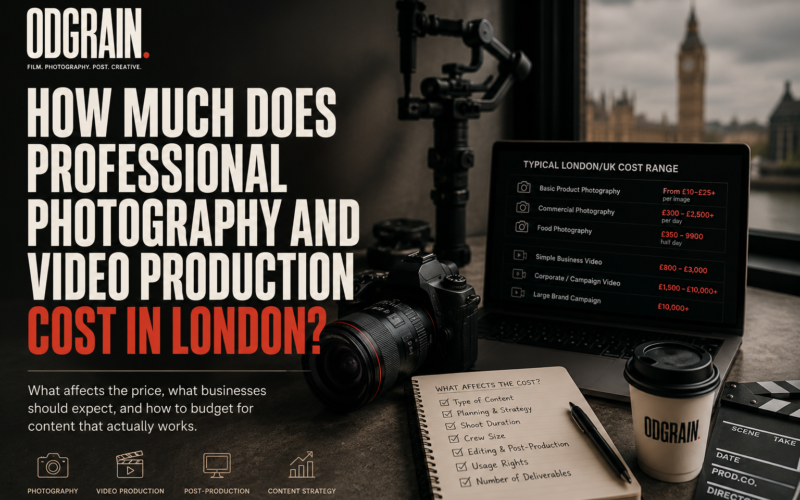
| professional photography and video production cost | Pricing article |
Suggested CTA Block
Stop posting random clips. Start building content that does a job.
ODGRAIN creates short-form video, campaign content, social media assets, and post-production for brands that want to look sharper and communicate better.
Book a video content shoot with ODGRAIN.
Featured Image Direction
Use a no-text featured image.
Visual concept:
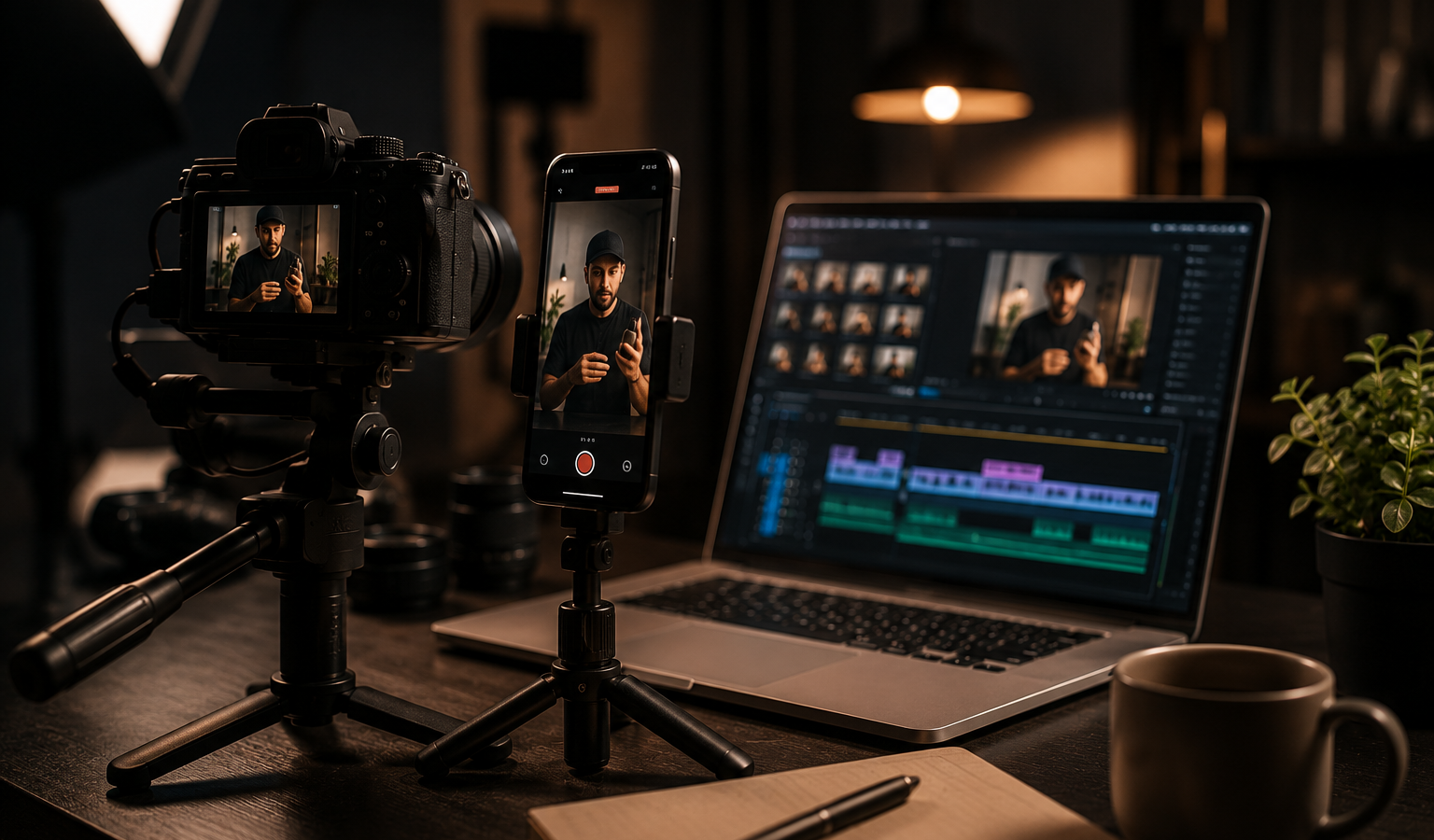
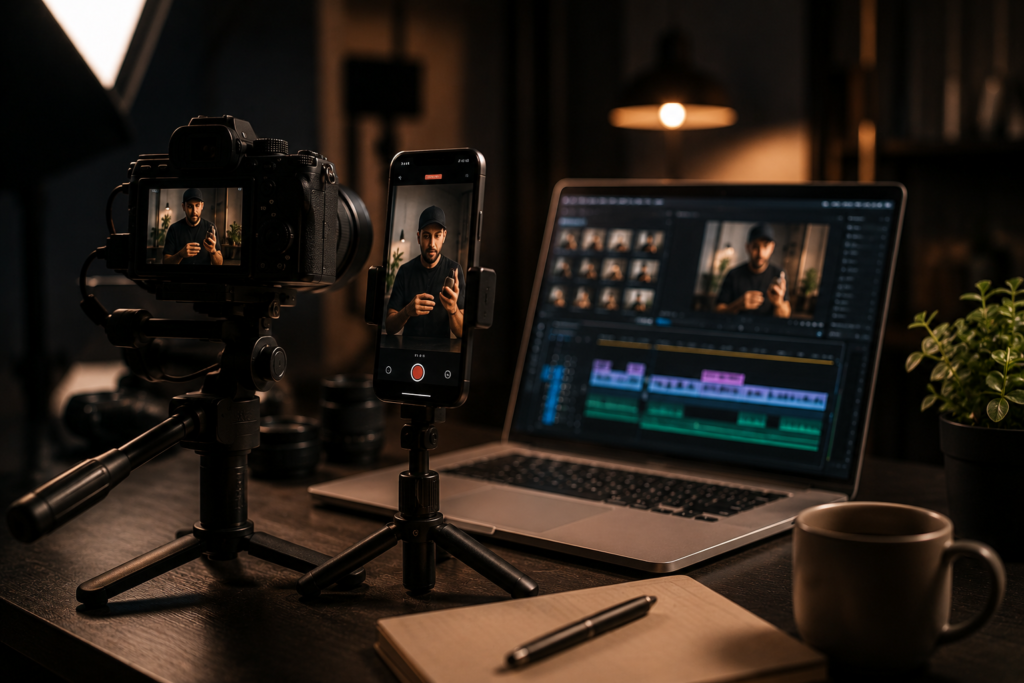
A cinematic vertical-video production setup. Phone mounted beside a professional camera, laptop with editing timeline blurred in the background, black desk, off-white light, red accent object, camera monitor showing a product or founder-style video frame. Premium, moody, clean, ODGRAIN-style.
Filename:short-form-video-for-business-odgrain.jpg
Alt text:
Short-form video production setup for business content with camera, phone, and editing laptop.
Caption:
Short-form video helps businesses turn attention into trust, content, and customer action.